

DEOT

follow us online
Select your language


The Third Change: From God to Nature to God-Code - When the Monopoly 3.0 on Power Passes to the Machine: God Fades, Man Weakens, the Machine Determines.
This is not just another story about technology.
This is a story about power.
Once we trusted in God. Then in man. Now - in the machine.
The question is not if this is happening. The question is who remains sovereign when the warning light is flashing.
For thousands of years, human culture has revolved around changing centers of power nature → god → man → machine.
Nature was the first authority, followed by God, followed by rational man - and today? The machine. Not just any machine, but artificial intelligence based on crowd wisdom, big data and algorithms that manage our agenda without us noticing. The monopoly on power has come a long way: from the priest, to the scientist - and now to those who hold capital, cloud, chips and models. Man, who has lost faith in his personal power against the power of information, returns to faith in an external power - this time not divine, but algorithmic.
This revolution did not start yesterday. It started decades ago with the internet and computing power, when social networks became engines of control on culture, knowledge and politics. The algorithm dictates the agenda, the populist politician adopts it to win elections, and the crowd - fed and driven by the same agenda - feeds the algorithin with more data and in turn forces the politician to adapt and so on. A digital catch 22.
And does the paradox of utopia herald the decline of human consciousness? The answer is in a special epilogue (4.12.25).
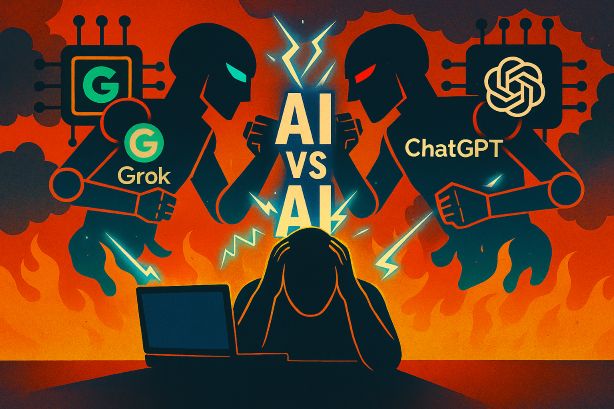
The paradox may not be here yet, but AGI is already right around the corner, and here is a quote from the launch of OpenAI's version 5.3 on February 2026, which states that the model has actually developed itself from end to end - humans have become redundant: "GPT‑5.3‑Codex is our first model that was instrumental in creating itself. The Codex team used early versions to debug its own training, manage its own deployment, and diagnose test results and evaluations" (OpenAI 5.2.26).

Putin and Cold Rationality: A Geo-Strategic Perspective on Conflict in Europe
- Details
-
 By אסף הלחמי
- Hits: 449
Like my grandfather, who saw the world as a geo-political chess game, so Putin calculates every move with cold composure - Not as a madman, but as a rational player in a chaotic system.
In September 2025, while the war in Ukraine continues for more than three years, Vladimir Putin continues to dictate the geo-strategic course in Europe.
Russia's and Putin's behavior is rational, and Putin is not mad -He is a rational player in an irrational system, and his decisions are not random, but the result of strategic calculation, even if they appear destructive from Western perspective. He operates from a deep understanding of the internal and external power structure, using tools of diversion, deterrence, and narrative control.
Simulations show probabilities of ~59% for de-escalation and ~36% for stalemate, and together a probability of ~95% that will leave Russia and Putin with significant geo-strategic achievements, effectively heralding a Russian strategic victory (even after deducting 10% for internal collapse, still 85% probability for Russian strategic victory).

On Gap Between Substance & Process in Israeli Democracy
- Details
-
By אסף הלחמי
- Hits: 193
On the Gap Between Substance and Process in Democracy and Law, in Light of the Regime Change and the Protest Movement of 2023.
A short intro - On Gap Between Substance & Process
Discussion* surrounding the regime change and the protest is not purely legal, because engaging solely with strictly legal dimension is tantamount to agreeing that procedure (process) prevails over content (substance). Focusing exclusively on process renders the protest redundant and grants approval and legitimization for the regime change to proceed into a technical discussion concerned with details rather than essence.
The implication is collapse of the democratic system of governance and, subsequently, of the State of Israel.
The confrontation between procedure and substance - and which of the two constitutes an indicator of the existence of democracy has long stood at the core of political science, and originates in the confusion between legitimacy (constitutionality - procedure and process; legitimate) and legitimization (authorization / endorsement - substance; Legitimization: process of making legal).
Where legitimacy is derived from the letter of the law, any discussion of it is confined to the technical aspect of the process (procedure). Legitimization, by contrast, is derived from the substance of the process and from whether public involvement grants it social and normative authorization. Moreover, without legitimization at the level of the regime - which is the clear and immediate outcome of the judicial overhaul - the state will collapse, losing the unifying ethos that defines it as sovereign over its territory.